Moving to Ireland from the US Challenges moving to ireland

Updated: Oct 14
For this blog we are focusing on Americans thinking of moving to Ireland with the culture shock and the other things to consider. For many Americans, the idea of moving to Ireland starts as a dream—green landscapes, friendly locals, and a slower, more meaningful pace of life. But when you begin researching what it’s actually like to live in Ireland as an American, you quickly discover a mix of charm, challenges, and cultural shifts that don’t show up in glossy travel brochures.
Ireland is one of the most popular destinations for Americans relocating to Europe, especially those with Irish ancestry. Searches like “how to move to Ireland from the US,” “living in Ireland pros and cons,” and “how to get Irish citizenship as an American” have exploded in recent years. And for good reason: Ireland offers safety, community, natural beauty, and one of the strongest passports in the world. We have so many recently moving here. Is this for you ?
But what’s the real story?

Moving to Ireland as an American: What Life Really Feels Like Moving to Ireland from the US Challenges moving to Ireland
The Good Things Americans Love About Living in Ireland
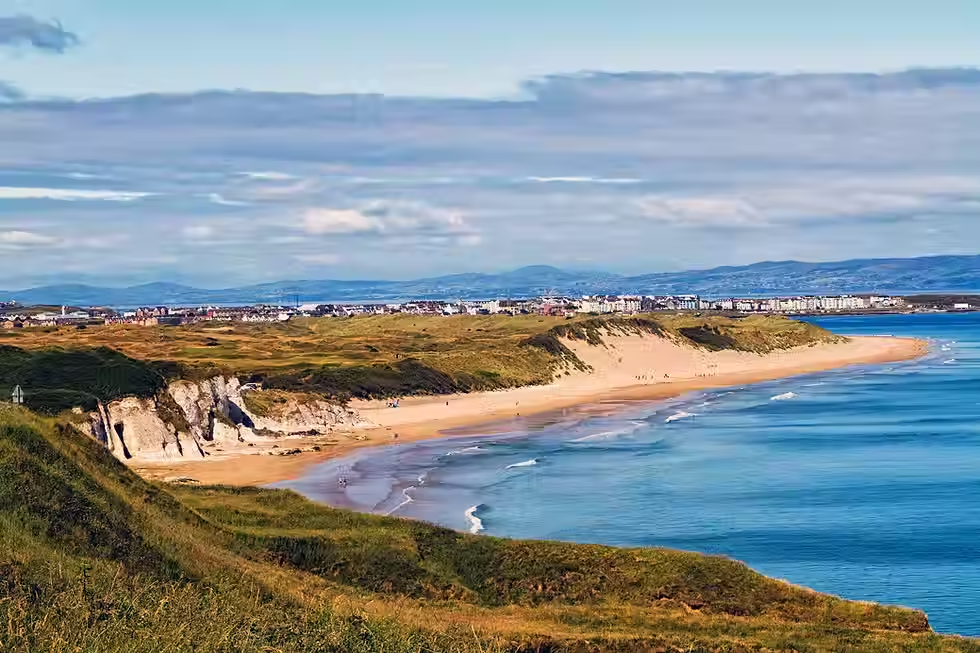
Most Americans fall in love with Ireland almost immediately. The landscapes are breathtaking—rugged coastlines, ancient castles, colourful villages, and rolling green fields that look like they were designed for postcards. But the real magic is the people. Irish friendliness isn’t a myth. Locals chat with you in shops, neighbours check in on you, and the pub isn’t just a bar—it’s the heart of the community.
If you’re coming from the US, you’ll notice the work–life balance right away. Ireland values time off, family life, and mental health. Long holidays are normal. Evenings and weekends are protected. And the overall pace is gentler, especially outside Dublin.
Healthcare is another major draw. While the public system can be slow, it’s affordable and accessible. Many Americans feel a huge sense of relief knowing that a medical emergency won’t bankrupt them.
And then there’s the travel. Living in Ireland means Europe is suddenly at your doorstep. A weekend in Paris, Barcelona, or Amsterdam becomes a realistic part of life.
Stunning landscapes — Cliffs of Moher, Ring of Kerry, Atlantic coastline, mountains.
Friendly, welcoming people — Ireland is known for warmth and sociability.
Safe country with low gun crime — Guns are largely illegal; crime rates are low.
Excellent pub culture — Social hubs with music, food, and community.
Proximity to Europe — 2 hrs to Barcelona, 3 hrs to Rome, 45 mins to the UK.
Strong workers’ rights — Minimum 20 days annual leave by law.
Accessible healthcare — Public system funded by taxes; private options available.
Rich culture & arts — Music, festivals, literature, theatre.
Great food scene — Traditional dishes, farmers’ markets, Michelin restaurants.
Strong passport & dual citizenship benefits — Irish passport is globally powerful
The Challenges Americans Notice When They Move to Ireland
Ireland is wonderful, but it’s not perfect—and it’s better to know the realities before you pack your bags.
The first shock is the weather. Ireland is mild, but it’s wet. Rain is part of the national personality. You’ll learn to dress in layers and carry a jacket even on sunny days.
The second challenge is the cost of living, especially in Dublin. Housing is competitive and expensive, and rentals disappear fast. Many Americans end up choosing commuter towns or smaller cities like Cork, Galway, or Limerick for better value.
Healthcare, while affordable, can involve long waiting lists for non‑urgent care. Many expats choose private insurance to speed things up.
And yes—driving on the left, navigating narrow rural roads, and mastering roundabouts takes time.
But the biggest adjustment is cultural. Irish communication is subtle. Americans tend to be direct; Irish people tend to be understated. “We’ll see” often means “no.” “It’s grand” can mean “it’s fine” or “it’s terrible.” You learn to read between the lines.
High cost of living — Especially housing in Dublin.
Unpredictable weather — Rain and rapid changes throughout the day.
Housing shortages — High demand, limited supply, expensive rents.
Healthcare waiting lists — Long delays for non‑urgent care.
Limited job opportunities outside Dublin — Fewer roles in rural areas. Check the critical skills list
Island isolation — Travel can feel limited compared to mainland Europe.
Fuel prices — Higher than many EU countries.
Slow police response times — Smaller visible police presence.
Not much non‑alcohol social scene — Social life often revolves around pubs.
High demand for rentals — Competition is intense in major cities
How Americans Can Apply for Irish Citizenship
If you’re planning a long‑term move, you’ll eventually look into Irish citizenship. There are three main paths for Americans:
Irish Citizenship by Descent If you have an Irish parent or grandparent, you can apply through the Foreign Births Register. This is the easiest route for many Americans with Irish heritage.
Irish Citizenship by Naturalisation If you don’t have Irish ancestry, you can apply after living legally in Ireland for five years (five of the last nine, including one continuous year before applying).
Citizenship Through Marriage If you marry an Irish citizen, you can apply after three years of marriage and three years of residence in Ireland.
Once approved, you gain the right to live and work anywhere in the EU—one of the biggest advantages of becoming an Irish citizen.
The Real Adjustments Americans Make After Moving to Ireland
The biggest shift isn’t the weather or the cost—it’s the rhythm of life. Ireland moves slower. Bureaucracy takes time. Deliveries take time. Tradespeople take time. But the trade‑off is a calmer, more grounded lifestyle.
You’ll also adjust to smaller spaces, smaller roads, smaller fridges, and smaller portions. But you’ll gain fresher food, better ingredients, and a stronger sense of community.
And somewhere along the way, you stop comparing Ireland to the US. You stop noticing the rain. You start recognising local accents. You find your favourite pub. And you realise that Ireland has quietly become home.
Leave comment if this stirred our interest.
Moving to Ireland from the US Challenges moving to Ireland



Comments